
Why "Human-in-the-Loop" Is Still Critical for AI in 2026
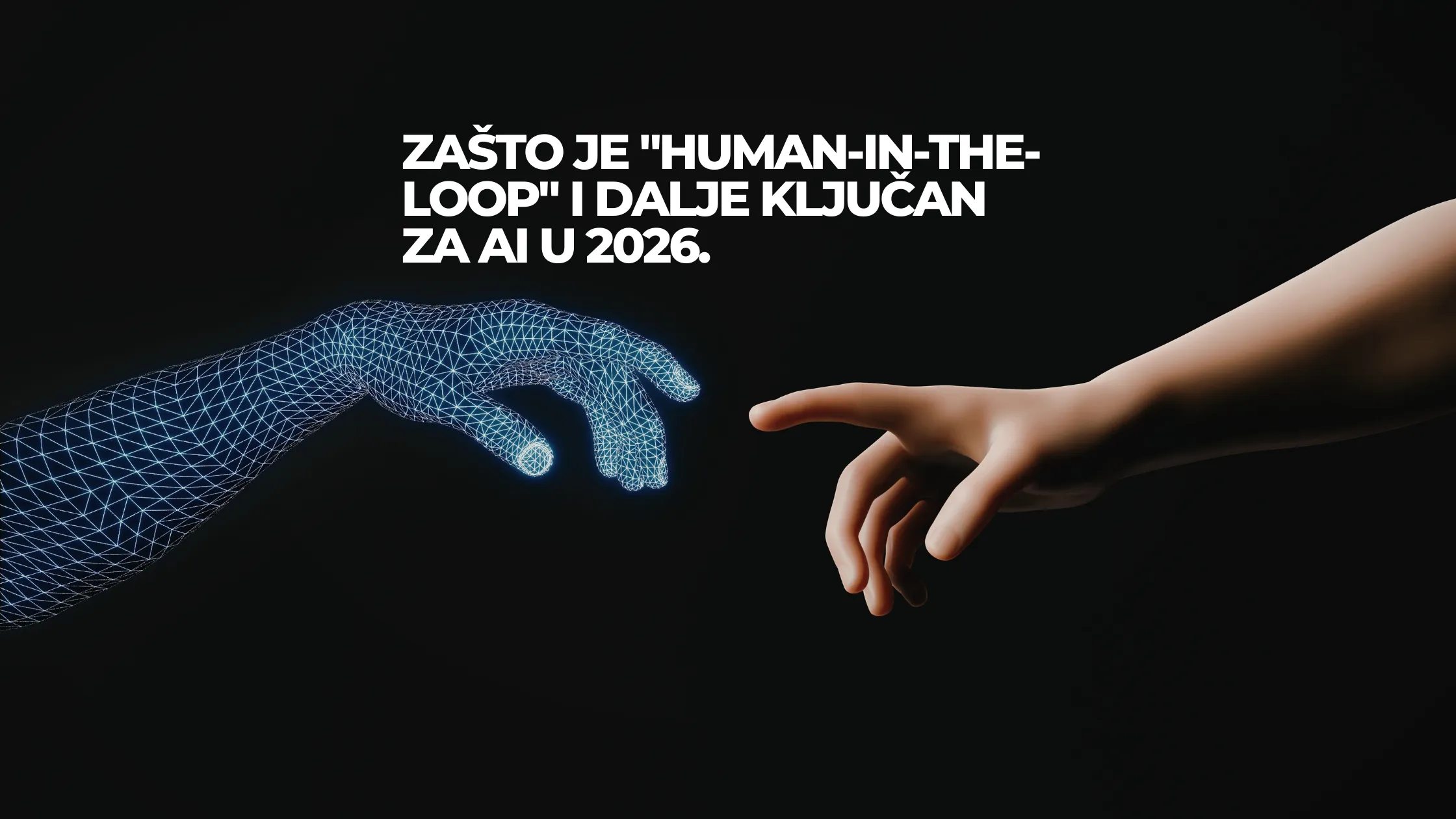
As AI models become more powerful, more present, and more capable, paradoxically, the role of the human doesn't disappear. It becomes elite. The person is no longer just an operator entering data — they become the pilot, the judge, and the moral compass of the system. In a world where content generation is cheap, human judgment becomes the most expensive resource.
The Reality of 2026
In futuristic films, AI usually takes over everything. In the reality of business in 2026, the situation is dramatically different. The most successful companies are not those that have completely eliminated humans and handed the wheel to algorithms — they are those that have mastered the symbiosis of human and algorithm.
We call this Human-in-the-Loop (HITL). This is not a temporary solution until AI becomes perfect. It is a permanent architecture for systems that must be accountable, transparent, and ethical.
What Is "Human-in-the-Loop" Actually?
HITL is an operational model in which AI performs the heavy, repetitive "physical labor" (90% of the work) — sorting millions of transactions, recognizing patterns in data, initial triage of customer requests. However, the system is designed to automatically recognize its own limits and "raise its hand" to request human intervention at critical moments:
- Low Confidence: When the AI model's confidence probability is low (e.g., OCR cannot read a crumpled receipt, or handwriting recognition is unsure whether it sees "5" or "S").
- High Risk: When decisions carry significant ethical or financial consequences, such as denying a loan application or making a medical diagnosis.
- Edge Cases: When a situation arises that the model has never encountered before (e.g., a new type of banking fraud or an unusual legal contract structure).
Real-world example: AI can read 10,000 pages of case law in 5 seconds and classify them by relevance. But only an experienced lawyer can synthesize that information and decide which defense strategy to build — weighing the specific moral weight of the case, the psychology of the judge, and factors an algorithm cannot quantify.
Where AI Fails and Humans Excel
AI is a brilliant statistician, but a poor sociologist. Models learn from data, and data is history. When the world changes overnight (as we saw during the pandemic or geopolitical crises), AI models continue predicting the future based on a past that no longer applies. That's when humans step in to "bend" the model toward the new reality.
Sarcasm, Slang and Emotion
AI struggles with subtle nuances of informal language, local dialects, and ironic humor. When a frustrated customer writes "Oh brilliant, absolute geniuses, well done!" — AI sentiment analysis may classify this as "Positive." A human immediately recognizes the heavy sarcasm.
Novel Ethical Dilemmas
When a self-driving car must choose between two collision scenarios, or an AI must deny insurance to a patient with a genetic marker — these aren't optimization problems. They require moral reasoning that reflects societal values, not training data.
Regulatory Requirements: The EU AI Act
HITL is not just a best practice — for many applications it is legally mandated. The EU AI Act explicitly requires human oversight for "high-risk AI systems" including:
- AI systems used in credit scoring and loan decisions
- Recruitment and HR screening tools
- Medical diagnosis and treatment recommendation systems
- Biometric identification systems
Important: Companies deploying AI in these categories without documented human oversight processes face fines of up to 3% of global annual turnover under the EU AI Act. HITL is not optional — it is compliance infrastructure.
How to Implement HITL in Your Business
Define Confidence Thresholds
Set the confidence level below which the AI automatically escalates to a human. For invoice processing this might be <95%; for medical triage, <99.5%.
Design the Review Interface
Build a clean human review queue that shows the AI's recommendation, its confidence score, and the supporting evidence — so reviewers can make fast, informed decisions.
Close the Learning Loop
Every human correction is a training signal. Feed corrections back into the model regularly so the AI learns from each exception and the volume of escalations decreases over time.
The Paradox of AI Excellence
The better your AI system becomes, the more strategic the human interventions it requests. In a mature HITL system, AI handles 99% of cases autonomously — and the 1% it escalates are genuinely difficult edge cases that deserve careful human attention.
This is the future of work: not humans versus machines, but humans elevated by machines — freed from the repetitive to focus on the irreplaceable.
Want to Build Responsible AI Into Your Processes?
Ishiros designs every AI system with HITL architecture from day one. Schedule a consultation to see what this looks like in your specific context.
Schedule Free Consultation